
Key Takeaways
- A sandy or gritty feeling in your eyes often points to a problem with your tear film.
- Dry eye syndrome and blocked oil glands are among the most common causes of these symptoms.
- At-home care like warm compresses and artificial tears can bring some relief.
- Persistent or worsening symptoms are worth discussing with an optometrist.
- Pinehouse Eyecare offers detailed assessments to identify what’s behind ongoing eye discomfort.
What That Sandy, Gritty Feeling Actually Means
You blink, rub your eye, and blink again, but the nagging sensation that something is in your eye remains. It’s a surprisingly common experience, and it can range from mildly annoying to genuinely disruptive by the end of the day.
That gritty feeling is usually your eye’s way of signalling that something is off with your tear film or the surface of your eye. Healthy tears form a smooth, even layer across your eye with every blink. When that layer breaks down or becomes unstable, the surface of your eye gets irritated, and sandpaper-like discomfort is often the result. At Pinehouse Eyecare in Saskatoon, we help patients get to the root of exactly this kind of discomfort.
Common Causes of Gritty Eyes
Dry Eye Syndrome
Dry eye is one of the most frequent reasons why your eyes feel gritty. This condition happens when your tears evaporate too quickly or your eyes don’t produce enough tears to keep themselves lubricated. Common symptoms of dry eye syndrome include:
- A burning or stinging sensation, especially later in the day
- Watery eyes. While this sounds contradictory, it’s your body’s attempt to deal with dryness.
- Discomfort that gets worse with screen time, reading, or being in air-conditioned spaces
Blepharitis and Meibomian Gland Dysfunction
Tiny oil glands called the meibomian glands release a thin layer of oil when you blink. That oil slows down tear evaporation. When the meibomian glands get clogged, their oil can’t do its job, and your tears evaporate too quickly.
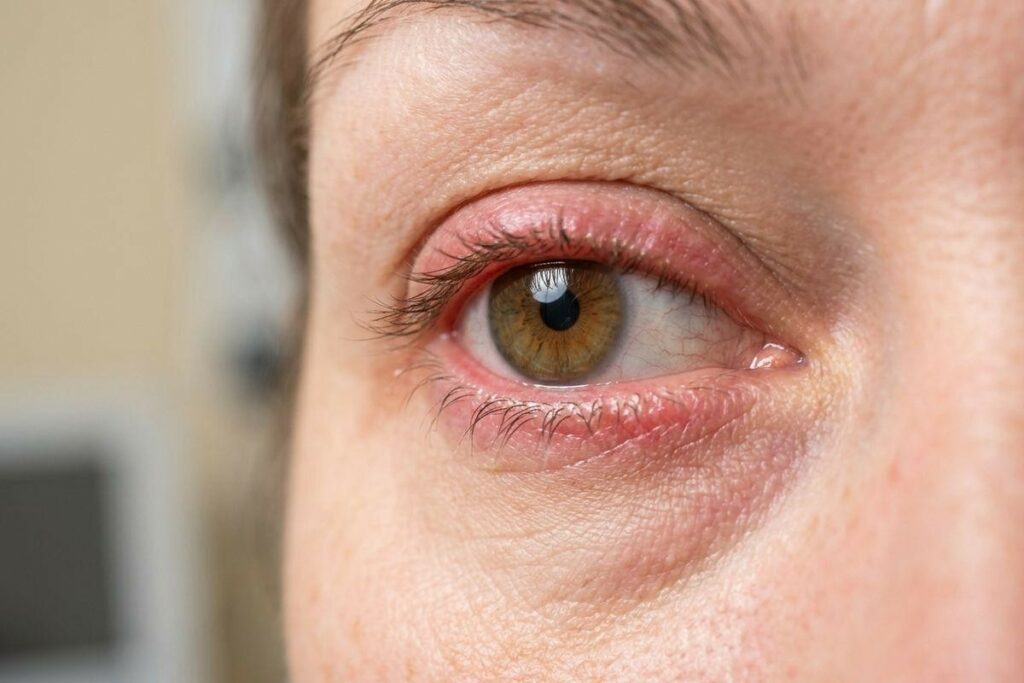
This condition is called meibomian gland dysfunction, and it often goes hand in hand with blepharitis, an inflammation along the edges of your eyelids. Symptoms of blepharitis include redness, crustiness, and swelling.
A sandy or gritty sensation in your eyes is often tied to a reduction in tear quality caused by one or both of these conditions.
Other Factors Worth Knowing
Dry eye and blepharitis are common, but they’re not the only possible causes of that gritty feeling. A few other factors that can contribute include:
- Eye allergies or seasonal irritants like pollen and dust
- Conjunctivitis, sometimes called pink eye
- A minor corneal scratch from a contact lens or a piece of debris
- Too much time in front of screens without blinking enough
- Dry indoor air, particularly during Saskatchewan winters
- Certain medications, including antihistamines and some blood pressure drugs

Symptoms That Often Go Along with Gritty Eyes
Gritty eyes rarely show up on their own. Other symptoms that can help with diagnosis include:
- Redness or pink discolouration on the white of the eye
- Burning or stinging that flares up in wind or dry air
- Sensitivity to light, even indoors
- Watery or teary eyes throughout the day
- Blurred vision that comes and goes, especially after long stretches of screen use
- Eyelids that feel heavy, sticky, or puffy, particularly in the morning
How to Get Relief from Gritty Eyes
At-Home Steps That Can Help
If your symptoms are mild, a few simple habits can make a noticeable difference. A moist heat mask (like a Bruder mask, available at most optometry clinics and pharmacies) is one of the most effective at-home options. Apply it to your closed eyes for about ten minutes to help soften any hardened oil in your meibomian glands and improve tear quality over time. A warm washcloth can work in a pinch but cools off too quickly to be as effective.
A few other things worth trying at home include:
- Preservative-free artificial tear drops, used throughout the day as needed
- A humidifier in your bedroom or home office to add moisture to dry indoor air
- The 20-20-20 rule: every 20 minutes of screen time, look at something 20 feet away for 20 seconds
What an Assessment Can Tell You
Home care has its limits. When symptoms stick around or keep coming back, an in-office assessment can identify what’s actually driving the problem so you can be pointed toward the right next step.
Professional options can include medicated drops that help support your natural tear production, in-office eyelid cleaning procedures for blepharitis, and treatments aimed at improving meibomian gland function. The right plan depends on what’s causing your symptoms, and an assessment is the starting point for figuring out what that looks like.
When to See an Optometrist About Gritty Eyes
Sometimes your eyes just feel off, but certain symptoms are worth getting checked out. Pay a visit to your optometrist if you notice any of the following:
- Discomfort that has lasted more than a few days without improving
- Sudden or noticeable changes in your vision alongside the gritty feeling
- Eye pain that goes beyond general irritation
- Symptoms that came back after you already tried at-home care
An eye exam can help you identify what’s causing your symptoms.
Keep Your Vision Comfortable
At Pinehouse Eyecare, we can assess your tear film, check your eyelid health, and talk through what makes sense for you. Getting a clear picture of what’s going on is the first step toward feeling more comfortable, whether that means at-home strategies, a prescription, or being pointed toward more advanced care.
Contact our caring team today and let’s figure out what your eyes are trying to tell you.