

Key Takeaways
- Cataracts happen when proteins in your eye’s lens clump together over time, clouding your vision.
- The 3 most common types are nuclear, cortical, and posterior subcapsular cataracts, and all affect your vision in different ways.
- Less common types include congenital cataracts in children and cataracts from eye injuries.
- Symptoms can vary, but they generally include blurry vision, glare, halos, and frequent prescription changes.
- Routine eye exams can help detect cataracts early, giving you more time to plan next steps.
Inside your eye, you have a lens, which helps focus incoming light. This lens is normally clear, but over time, proteins in that lens can clump together and form cloudy patches. This condition is called cataracts, and at Pinehouse Eyecare, we want you to understand how they work and what they mean for your vision.
There are several types of cataracts, each forming in a different part of the lens and affecting your vision in various ways. Some develop slowly over decades, while others can appear quickly. Knowing the difference helps you understand what to look for and when to schedule an eye exam.
The 3 Most Common Types of Cataracts
Nuclear Cataracts
Nuclear cataracts form right at the centre of the lens. They’re closely linked to aging and tend to develop slowly, sometimes over many years. You likely won’t notice them much, if at all, at first.
As they progress, your distance vision may become blurry, and colours may take on a yellowish tint. Some people notice a temporary improvement in close-up reading early on, which can be misleading and is caused by the lens changing as the proteins build up. It’s important to know that this change is short-lived and will not last forever.
Cortical Cataracts
Cortical cataracts start at the outer edge of the lens and spread inward in a spoke-like pattern toward the centre. They’re associated with both aging and diabetes.
Where nuclear cataracts impact the centre of your vision, cortical cataracts have a different effect on how you see. As they progress, you may notice:
- Glare from headlights or sunlight
- Trouble with contrast, making edges harder to define
- Difficulty seeing clearly at night
If you have diabetes, regular diabetic eye exams can help monitor your overall eye health, including diabetic retinopathy and cataract development.
Posterior Subcapsular Cataracts
Posterior subcapsular cataracts form at the back of the lens. They tend to grow faster than other common types, so symptoms can appear sooner. You may notice some symptoms similar to those of other types of cataracts, as well as a few others.
For example, reading may become difficult, or night driving could be uncomfortable because bright lights cause noticeable glare and halos. Long-term steroid use and diabetes are both associated with a higher risk of developing this type.
Other Types Worth Knowing About
Congenital and Pediatric Cataracts
Not all cataracts develop with age. Some children are born with them or develop them in early childhood. Genetics and certain complications during pregnancy can also increase the risk of this type.
When cataracts affect a child’s vision during key developmental years, early treatment matters. If left unaddressed, they can interfere with how the visual system develops. Children’s eye exams are a key part of their overall health care as they grow up.

Traumatic and Secondary Cataracts
A direct injury to the eye can damage the lens and lead to a traumatic cataract. It’s important to know that a cataract from an eye injury doesn’t always appear right away. Instead, it can develop months, sometimes even years, after the event.
Secondary cataracts are a different situation entirely. They occur after cataract surgery, when the lens capsule left behind becomes cloudy over time. With this type, your vision may start to blur again, which is understandably worrying. The good news is that a laser procedure can address the cloudiness without another full surgery.
Symptoms to Watch for Across All Types
The type of cataract you have can shape some of your symptoms, but some signs show up regardless of type. If you notice any of the following, it’s worth booking an eye exam:
- Blurry or hazy vision that doesn’t get clearer after you put on your glasses
- Glare, halos, or increased sensitivity to light, especially at night
- Frequent changes needed to your glasses prescription
These symptoms can overlap with other eye conditions and diseases, so getting a proper assessment is important to know what’s actually going on.
Cataract Detection and Treatment
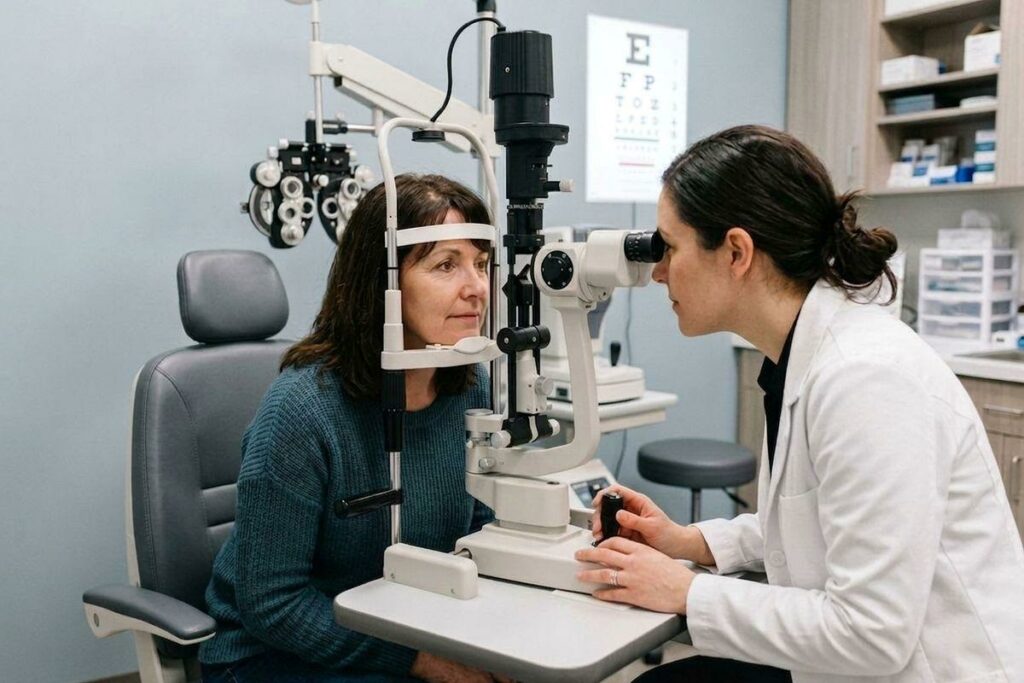
One of the most useful things about routine eye exams is that they can detect cataracts sometimes before you’ve noticed any symptoms. A thorough exam gives our eye care team a look at your lens and helps them track any changes over time. Early detection means you have more time to understand your options before symptoms start to affect your day-to-day life.
When a cataract does progress to the point of affecting your quality of life, surgery may be recommended. During this procedure, the cloudy lens is removed and replaced with a clear artificial one, giving you back clear sight.
Schedule Your Eye Exam
At Pinehouse Eyecare, our team can monitor your eye health and connect you with the right resources if or when treatment is needed. If you’ve noticed changes in your vision or it’s been a while since your last exam, we encourage you to book an appointment. You deserve to see what matters.